• Skip to primary navigation
  • Skip to main content
  • Skip to primary sidebar

Cultivage

Cultivating talent and creating opportunities

  • Home
  • About
  • Professional Development
  • Coaching Services
  • Speaking Services
  • Ideas that Matter
  • Contact
  • Show Search
Hide Search

Ideas that Matter

Managing the Call for Authenticity

Maureen Breeze · Jun 6, 2024 ·

It can be difficult to receive feedback that challenges our identity.

Early in my career, I lived in New York City and was told to lower my ‘warmth’ dial to be taken more seriously. The feedback went against my self-view. The thought of monitoring my smile and enthusiasm felt counter to who I was.

On the flip side, I have clients who have received feedback that they are too direct and could benefit by softening their approach. They often share that this different approach feels phony.

Other clients have been told to share their successes more readily and shine a spotlight on their achievements. They often recoil at the idea of self-promotion and believe that their good work deserves to be noticed without any assertation on their part.

And then there are those who are told they are ‘too much’ – too loud, too opiniated, too overbearing. A suggestion to turn down the dial can feel like a personal assault.

I commonly hear, “Why should I change the way I show up? Isn’t it more important that I am authentic?” In these moments, it’s easy to cling to our behaviors and claim authenticity.

Today, authenticity reigns king. Research indicates that it rose to one of the top ten trait desirable leadership attributes in 2022.

However, too often in the name of authenticity, we surrender to a limited vision of ourselves. We may be naturally shy and identify this trait as our authentic selves. However, if we don’t challenge our behaviors, we can be socially risk-adverse in ways that limit our potential. We may be very direct and quick to share all that’s on our minds. And while this may feel authentic, it may interfere with developing critical social nuances.  Pushing ourselves to grow and develop often requires that we adopt new behaviors that feel out of character.

Authenticity and evolving identities seem to be at odds.

However, I argue that authenticity is not about honoring our uniqueness, personality preferences, and behavior tendencies. Rather, it’s about the ability to connect and tap into our shared humanity. It’s about tuning in and finding the right frequency on the radio dial.

When we connect, we experience a sense of ‘realness’ in others. Behaviors that fuel connection allow us to witness and be witnessed by others and thereby experience authenticity.

How do we do this?

It begins by understanding our North Stars; the critical guiding values that serve as a litmus test for our decisions, actions, and behaviors.

My favorite question to ask to uncover North Stars is “Who do you want to be in the context of this situation?” This question taps into our vision of how we hope to show up, even if it requires us to show up in ways that aren’t comfortable or natural at first. From our response to this question, we can extract the guiding principle to inform our behaviors, even if it feels foreign to us. It’s not about being a chameleon and changing our stripes at every turn, but about intentionally choosing behaviors to support who we want to be.

Recently, I coached a very likable leader. In fact, his likability was his superpower. He had a knack for making people feel comfortable and at ease. His warmth and gentle spirit made him approachable and trustworthy. When he was challenged by top leadership to promote greater accountability across the organization, he paused. He didn’t want to be the heavy hand, and it felt inauthentic to code switch into the tough and demanding boss.

I asked him “who do you want to be in this situation?” He didn’t respond likable, but rather shared that he wanted to be understood, respected, caring yet demanding, strong and open. With this more nuanced vision of himself, we began exploring language he could employ in these tough conversations that would allow him to set expectations, make clean agreements, demonstrate care and dignity for others, and promote the accountability the company demanded. The process allowed him to craft authentic actions in situations where he initially felt inauthentic.

As we grow, situations challenge us to present in ways that may feel uncomfortable. By accepting this challenge, our identity expands. And in the process, we are defined less by inherent personalities and evolve into chosen characters in our life story.

And in this process, we become less defined by our inherent personality, and more by the chosen character we strive to be in our life story.
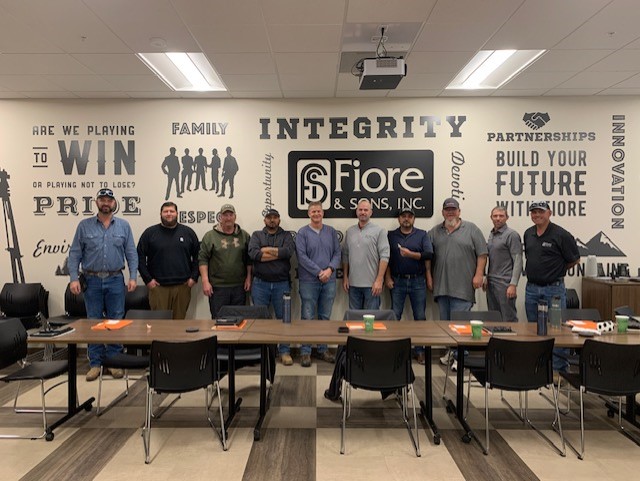
Elevating Leadership Excellence: CPD Empowers Fiore & Sons, Inc. Leaders Through Coaching Skills Certificate Program

Maureen Breeze · Mar 29, 2024 ·

Fiore & Sons, Inc. Coaching Certificate Participants

By University of Denver Center for Professional Development

In the dynamic landscape of professional development, organizations increasingly recognize the pivotal role of coaching in fostering leadership excellence and driving organizational success. Recently, the University of Denver’s Center for Professional Development (CPD) successfully concluded the first of two Coaching Skills certificate programs tailored for leaders at Fiore & Sons, Inc., a privately held heavy civil contractor in Colorado. Facilitated by Cultivage Principal, Maureen Breeze, an esteemed coach and instructor with over 25 years of expertise, the program delivered transformative insights and actionable strategies to empower participants in unlocking their full potential as leaders.

With a robust background in leadership development, coaching, and executive management across diverse industries and global contexts, Maureen Breeze brought a wealth of knowledge and practical wisdom to the program. She developed a tailored learning experience, enriching the curriculum with real-world case studies and personalized content that resonated deeply with the participants’ roles and challenges at Fiore & Sons.

One of the key highlights of the program was the customization of coaching content to address the specific needs and dynamics of Fiore & Sons. Through interactive exercises, participants were equipped with tools to enhance their coaching efficacy and drive sustainable growth within their respective roles. From exploring models for giving feedback to engaging guests from within the company for insightful discussions, the program fostered a holistic learning environment that seamlessly integrated theory with practical application.

The diverse cohort of leaders, including Site Superintendents, General Superintendents, Directors of Operations, and Project Management, attested to the program’s profound impact on their professional growth and skill development. Their glowing testimonials underscored the effectiveness of Breeze’s teaching methodology and the program’s relevance in empowering high-performing individuals to further excel in their roles.

The significance of coaching skills training for Fiore & Sons lies in its commitment to fostering a culture of continuous learning and talent development. By investing in the personal and professional growth of its employees, Fiore & Sons reinforces its dedication to nurturing future leaders and driving organizational excellence.

Who do you want to be in 2024?

admin · Feb 15, 2024 ·

Managing conflict is one of our most requested topics for leadership training. It’s no surprise. Whether conflicts exist at the organizational, team, or individual level, they can create distractions and drain energy. However, research shows that when conflicts are managed well, they can yield better decisions and improved outcomes (Tjosvold, Wong, Chen, 2014). One of the first steps to managing conflict well depends on your mindset and how you position yourself within the context of the challenge.

Several years ago, I was introduced to a practice by Aldo Civico, lecturer in the Negotiation and Conflict Resolution program at Columbia University’s School of Professional Studies, that I now incorporate in all my conflict management trainings.

To engage people in this practice, Civico asks you to consider a conflict you are experiencing. As you think about the conflict, he invites you to answer the following questions:


  1. What is the problem?
  2. What is the source of this problem?
  3. Who is to blame?
  4. What is blocking the solution?
  5. What limitations do you face in dealing with it?

He asks how you feel. Typically, people report feeling frustrated, stirred, anxious, or stuck.

Then, Civico invites you to write reflections to this second round of questions:

  1. Who do I want to be within the context of this situation?
  2. What inner resources will help me achieve this?
  3. How might I look, sound, and operate?
  4. How might this impact the situation?
  5. How might this impact my life?

After reflecting on these questions most people report feeling more optimistic, grounded, and even hopeful.

A critical difference between these lists of questions is that the first focuses on the problem, while the second focuses on the outcome. Perhaps more importantly, the second list of questions brings into focus who you want to be while framing an opportunity for growth. These questions engage us in the ultimate creative act of deciding how we want to show up and manage ourselves in the face of challenges.

As an Executive Coach, I often have my clients respond to this second list of questions at the start of the engagement. Whether they are dealing with conflict or simply want to grow in their leadership, these questions help them intentionally decide who they want to be and how they want to show up during the process. These intentions can be powerful as they ride the ups and downs inherent to leadership responsibilities. You might also find them to be a powerful tool to share with your team as you embark on collaboration and problem-solving together.


Combating Workplace Stress & Distress by Building Resiliency

Maureen Breeze · Jul 29, 2023 ·

A recent client of mine enrolled in coaching after receiving a long sought after promotion. While elated by the new opportunity, increased pay, and powerful title, she was in serious distress. Her team was short-staffed and struggled to get the right people on board. The organization was contemplating an expansion into a new market, which she disagreed with and believed would further overwhelm her team. In addition, with her deep institutional knowledge, she had always been the ‘go to’ person at the firm, yet she could no longer balance everyone’s requests with her new responsibilities.

She was burning out and seriously considered quitting. The disruptions, both good and bad, were too much to absorb.

Are you dealing with workplace disruptions that create stress?

Perhaps you are facing new technologies, market expansion/reduction, personnel reductions, reallocated workloads, new leadership, a new “Work from Home” policy, or residual supply chain effects. The list can feel endless.

Disruptions abound and our ability to be resilient in the face of them is critical to both our well-being and organizational success. Research shows that high levels of resilience positively influence employee satisfaction and engagement. And employees managing well-being and mental health challenges are four times more likely than others to leave organizations (McKinsey State of the Organization, 2023).

As an executive coach, I am often asked how leaders can build resilience, both for themselves and their direct reports. I begin by emphasizing that not all stress is bad. When we experience eudaemonic stress – stress that arises from the pursuit of excellence & self-fulfillment through a virtue- or value-driven lifestyle – it makes us healthier, leads to peak performance, and helps us thrive. But when we experience distress in the workplace – a negative mental state that leads to severe psychological and emotional pain, anxiety, and sorrow – it can lead to burnout where we have no emotional reserves to bounce back.

So, the first step involves identifying your experiences as either healthy workplace stress or dangerous workplace distress. You can then explore healthy ways to manage stress and eliminate factors causing distress.

And once you’ve eliminated the factors contributing to distress that are within your control, consider taking the following steps to build resilience:

Manage Your Brain Power

Implement scheduling strategies to retain focus. Put discrete time on your calendar to manage emails as opposed to checking them continuously throughout the day.

Schedule time for strategic thinking and turn off notifications that pull your focus. The goal is to avoid context shifting – moving in and out of work projects – which taxes the brain and leads to cognitive overload and fatigue.

Take conscious breaks throughout your day. The brain can stay highly focused for 20 minutes, and optimal work block times are typically between 90 and 120 minutes. To take a quick brain break, walk around the office, grab a glass of water, or do standing stretches to rest and refuel.

Build Healthy Connections

Research shows that an individual’s resilience can be bolstered by investing in strong relationships and networks. A positive interaction with a friend or close colleague can help make meaning of difficult situations, provide empathetic support, and harness confidence to push through difficult periods.

Create a sense of belonging in your organization. Research indicates that when employees feel like they belong in an organization, there is a 56% increase in job performance, a 50% drop in turnover risk, and a 75% reduction in sick days. Simple steps such as encouraging intentional hellos/good-byes at the start and end of the day, recognizing birthdays and work anniversaries, implementing systems for company-wide acknowledgement of employee contributions, and formalizing mentorship relationships can significantly impact employee experience and retention.

Strive for Emotional Stability

Incorporate strategies to manage emotional triggers that exacerbate stress. Identify what typically triggers you and find a way to pause before responding. For example, take five deep breaths, momentarily walk away from a difficult situation and collect yourself, or table a response until the next day if possible. The goal is to buy time to create an intentional response rather than emotionally react to a triggering situation.

Minimize ambiguity for yourself and your team whenever possible, by clarifying expectations and setting clean agreements for work processes and deliverables. When ambiguity is unavoidable, take time to acknowledge and normalize it as part of the process.

Develop Optimism

Dr. Martin Seligman’s decades of research points to optimism as a critical contributor to resilience. He defines optimism as the belief that with effort, you can impact the outcome. Distress can result from exerting effort on issues outside of our control. However, identifying what is within your control and strategically applying effort to impact the outcome leads to feelings of efficacy and ultimately strengthens resiliency.

Identify potential solutions to problems, even if you don’t act on them. It is difficult to be resilient when we believe we are backed into a corner with no alternatives. One way to combat this is to ask yourself, “What are three things I can do now?” While the solutions you generate may not be great, they can lift you from a feeling of helplessness into a state of possibility. Research shows that having options, even if they aren’t optimal, reduces distress.


As my client worked on the steps outlined above, she realized she couldn’t ultimately decide whether the organization expanded into new markets, but she could control how she communicated her points of view on the matter in influential ways. She doubled down on her efforts to effectively onboard new team members and carefully delegated new responsibilities to her team to give them opportunities to grow while giving her more time to do strategic work. And perhaps most importantly, she scoped her time for managing emails to the first and last hours of the day and turned off all notifications so that she could manage her focus and reduce brain fatigue. While her stress load is still significant, she has moved out of distress and is growing in her new role that she worked so hard to achieve.

Humility: A Cornerstone for Growth and Leadership

Maureen Breeze · Sep 20, 2022 ·

Several weeks ago, Bonnie Raitt entertained a sold-out crowd at the picturesque Red Rocks amphitheater in Colorado. Under a brilliant full moon, she performed with grace and humility, as though it were the most important concert of her career. She humbly told the audience she was nervous to sing a ballad in front of Diana Reeves, who happened to be in the audience, but that she would ‘lean in’ to her nerves. Later, she offered insights into her creative inspiration and shared stories of inner demons she’d wrestled throughout her life. And over and over, she graciously thanked her family, friends, and fans.

At one point, she told the audience she needed to collect herself and paused for a moment in silence. Then she sat on a simple stool and sang her Grammy award-winning hit, “I Can’t Make You Love Me.” With every word, you felt the pain, disappointment, and resolution as if she were living the experience in real time. The silent crowd was rapt.

In this magical moment, her star power matched her humility. Her artistic brilliance let the audience see how authentically human she is.

At Cultivage, we’ve been reflecting on humility a lot lately. It has become a cornerstone concept for our leadership curriculum. Humility seems to be the crystalizing ingredient when it comes to taking ownership of our work, improving our abilities, and starting anew in the face of setbacks.

Humility is not to be confused with humiliation – an experience that creates shame – but rather recognized as a state of deep self-awareness where we embrace our strengths and weaknesses. A sense of humility helps us see where we can get better. It is not self-deprecating; instead, it is acknowledging that we have much to learn. And it is the perfect sword to fight the grips of perfectionism.

Practicing humility can be hard, especially for those in leadership positions. Being humble can challenge our perceptions of power. It requires courage and curiosity to embrace opportunities for growth and to resist putting ourselves above others. When a leader has the humility to ask her team how she can do better, it can impact the perception of the power dynamic. And when a man leaves a well-established career to start over and chart a new adventure, it can challenge his sense of personal power, confidence, and identity.

It is no surprise that humility requires a strong sense of self. The word humility comes from the Latin word humilitas, which means ‘of the earth.’ The Humble Warrior pose in yoga offers a great visual: the legs are in a wide stance for grounded stability, the torso dropped and curled to bow to the earth, and the hands clasped behind the back and reaching upward to the sky. The pose requires control, strength, balance, and flexibility, much like the state of humility.

Dr. David Hawkins, a philosopher and medical doctor, writes that “…Humility, despite its negative public and social image in some quarters of society, is indicative of expertise, wisdom, and maturity.” And many spiritual traditions believe that deep spiritual maturity can only be achieved through the practice and principle of humility.

Practicing humility requires deep introspection. Perhaps this is why life-shattering events often bring about our humility. When we are taken to our knees, we are more likely to ask the big questions, tune in, and see the world – and our place in it – differently.

The book, Falling Upward: A Spirituality for the Two Halves of Life, takes the humbling experiences of people who have “fallen, failed, or gone down” in some way and eloquently reframes them as a turning point in the trajectory of those people’s lives. According to author Richard Rohr, these humbling moments are often the launch point for the second half of life where we grow internally. He values these experiences so much that he writes, “I pray for a humbling experience every day.”

To show up with humility demands we honestly assess and accept our contributions—both good and bad—to any given situation. From this vantage point, we can acknowledge where we come up short, ask for feedback and support to get better, and act on opportunities for growth.

Here are my 10 favorite questions to support a humble mindset:

  1. What can I learn?
  1. Where are my blind spots?
  1. What don’t I understand?
  1. What am I fearful of?
  1. What am I avoiding?
  1. Where do I need strength?
  1. Where do I need support?
  1. Where do I need to pause and listen?
  1. What might I learn here that may be of help to others?
  1. How can I be of service in this situation?

What does humility mean to you? Where do you see humility in the world around you?

  • « Go to Previous Page
  • Go to page 1
  • Go to page 2
  • Go to page 3
  • Go to page 4
  • Interim pages omitted …
  • Go to page 6
  • Go to Next Page »

Primary Sidebar

Ideas That Matter – The Cultivage Blog

From neuroscience to behavior economics, read musings on the latest research and trends that impact and reflect how we work and live.

Contact Us

Contact us for more information  Email Us Today!


Copyright © 2025 | Cultivage | (303) 912-0271 | email

  • Home
  • About
  • Professional Development
  • Coaching Services
  • Speaking Services
  • Ideas that Matter
  • Contact